
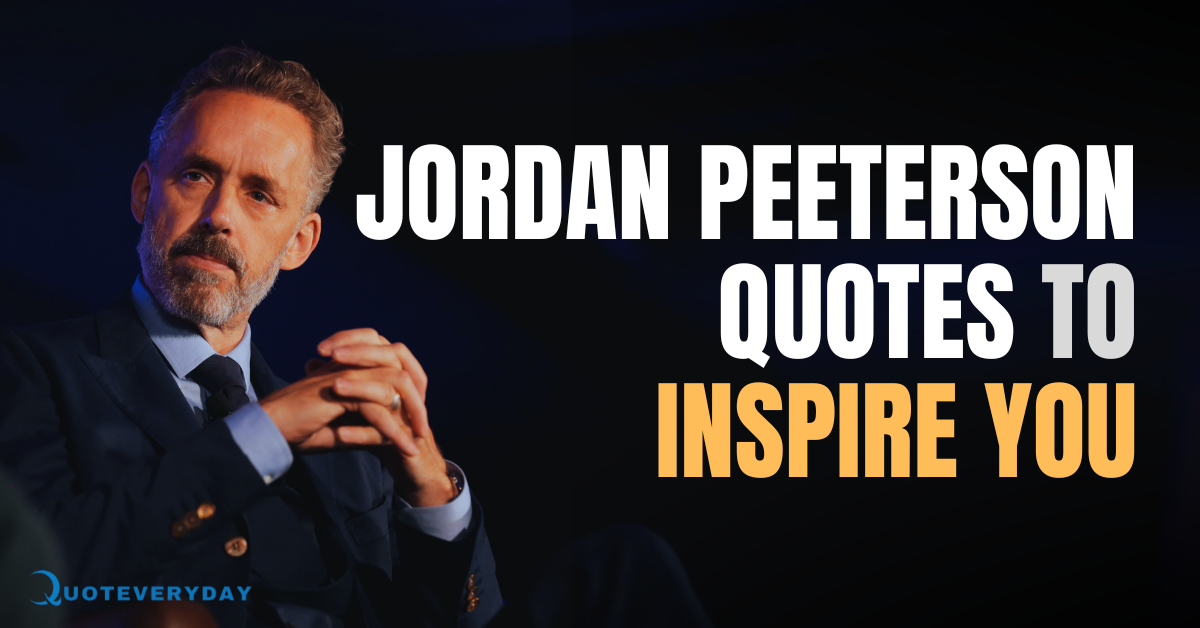
Jordan Peterson is a well-known psychologist, speaker, and author. He has helped millions of people through his powerful talks, books, and interviews. Many of his ideas are deep and meaningful, but also simple enough to change the way we think. Jordan Peterson quotes often focus on taking responsibility, finding purpose, and becoming stronger in life. His motivational quotes have inspired people all over the world to face challenges and become better versions of themselves You can explore more about Jordan Peterson’s life here.
In this article, we will share 26 Jordan Peterson quotes to inspire you in your life. These are some of the best Jordan Peterson quotes that can guide you when you feel lost, unmotivated, or unsure of yourself. Whether you’re looking for Jordan Peterson sayings about life or just want to feel more motivated, these words will help light your path. Let’s explore these powerful messages together.
Table of Contents
26 Jordan Peterson Quotes To Inspire You in Your Life
“Don’t lie about anything, ever. Lying leads to Hell.”
Jordan Peterson emphasizes the importance of honesty, warning that even small lies can lead to bigger problems. He suggests that dishonesty creates personal and societal chaos, leading to regret, guilt, and destruction. Telling the truth, even when difficult, builds integrity and trust.
“There’s a personality trait known as agreeableness. Agreeable people are compassionate and polite. And agreeable people get paid less than disagreeable people for the same job. Women are more agreeable than men.”
This Jordan Peterson Quote explains that agreeable people tend to be kind and cooperative but may struggle to negotiate for higher pay. Since women, on average, score higher in agreeableness, they may earn less. He suggests that developing assertiveness can help individuals achieve better financial outcomes.
“You can’t go backward in life.”
Peterson highlights that life only moves forward, and dwelling on the past won’t change it. Instead of regretting mistakes or missed opportunities, he encourages learning from them and focusing on growth. Progress comes from accepting reality and making better choices for the future.
“To master a new technology, you have to play with it.”
Peterson suggests that true learning comes from hands-on experience. Simply reading about technology isn’t enough. You need to experiment, explore, and make mistakes. By actively engaging with it, you develop a deeper understanding and the confidence to use it effectively.
“Happiness’ is a pointless goal.”
Peterson argues that chasing happiness is unwise because it is temporary and unreliable. Instead, he believes life should be about pursuing meaning, responsibility, and personal growth. True fulfillment comes from overcoming challenges, not just seeking momentary pleasure or comfort.
“I’ve studied authoritarianism for a very long time for 40 years and they’re started by people’s attempts to control the ideological and linguistic territory.”
Peterson warns that authoritarian regimes often begin by controlling language and ideas. When free speech is restricted, people lose the ability to think and express themselves openly. He emphasizes that defending open dialogue and diverse perspectives is crucial to preventing oppression.
“Power is competence.”
Peterson defines true power as the ability to be skilled, capable, and effective. He suggests that those who develop expertise and take responsibility naturally gain influence. Instead of seeking dominance over others, he encourages people to build competence, which leads to real authority.
“Women deeply want men who are competent and powerful. And I don’t mean power in that they can exert tyrannical control over others. That’s not power. That’s just corruption.”
Peterson explains that women are generally attracted to men who are capable, responsible, and strong. Not those who seek control through force or manipulation. True power comes from competence and integrity, while corruption and dominance are signs of weakness, not strength.
“Abortion is clearly wrong.”
Peterson takes a firm stance against abortion, suggesting it is morally wrong. His view likely stems from the belief that life has inherent value and should be protected. While the topic is complex and debated, he encourages deep ethical reflection on the consequences of such decisions.
“It’s not just human nature to associate in tribes. It’s deeper than that.”
Peterson suggests that forming groups isn’t just a social habit but something deeply rooted in human biology and psychology. People seek belonging, identity, and security within groups. This tribal nature can create strong communities but also lead to conflict when differences arise.
“Free speech is not just another value. It’s the foundation of Western civilization.”
Peterson argues that free speech is essential for a healthy society, as it allows open debate, truth-seeking, and progress. Without it, individuals lose the ability to challenge ideas and think independently. He sees it as the core principle that sustains democracy and personal freedom.
“Music has an intrinsic meaning, which has always been mysterious to me.”
Peterson acknowledges that music carries deep emotional and psychological significance, yet its impact is hard to fully explain. It resonates with people on a level beyond words, influencing mood, memory, and even personal transformation, making it a unique and powerful human experience.
“If you learn a martial art, you learn to be dangerous, but simultaneously, you learn to control it.”
Peterson highlights that learning martial arts isn’t just about fighting, it’s about discipline and self-control. By becoming skilled, a person gains confidence and restraint. True strength isn’t about aggression but about having power and choosing when, or when not, to use it.

“Accept the terrible responsibility of life with eyes wide open.”
Peterson stresses that life is difficult and full of challenges, but avoiding responsibility only makes it worse. Instead of denying reality, he urges people to face hardships bravely, take ownership of their actions, and find meaning through responsibility and perseverance.
“You can’t have a value structure without a hierarchy. They’re the same thing because a value structure means one thing takes precedence over another.”
Peterson explains that hierarchies naturally form because values require prioritization. Some things are more important than others, and society, like individuals, must rank them. He argues that hierarchies aren’t inherently oppressive but necessary for order, progress, and meaningful decision-making.
“If you’re not going to be rewarded for your virtues, and instead you’re going to be punished for them, then what’s your motivation to continue?”
Peterson highlights the danger of a society where good behavior is ignored or punished. When people see no reward for honesty, hard work, or integrity, they may lose motivation to do the right thing. He warns that this can lead to a decline in personal effort and social trust.
“The most propagandistic element of ‘Frozen’ was the transformation of the prince at the beginning of the story, who was a perfectly good guy, into a villain with no character development whatsoever about three-quarters of the way to the ending.”
Peterson criticizes Frozen for using storytelling in a way that pushes an agenda rather than developing characters naturally. He argues that turning a good character into a villain without proper growth or reasoning weakens the narrative and serves ideological messaging over genuine storytelling.
“Don’t be dependent. At all. Ever. Period.”
Peterson stresses the importance of independence, urging people to avoid relying too much on others. While support is valuable, true strength comes from self-sufficiency. He believes personal growth, freedom, and confidence are only possible when individuals take full responsibility for their own lives.
“Don’t compare yourself with other people; compare yourself with who you were yesterday.”
Peterson advises focusing on personal growth rather than competing with others. Everyone has a unique journey, so the best way to improve is by measuring progress against your past self. Small, consistent improvements lead to long-term success and a stronger sense of self-worth.
“The idea that women were oppressed throughout history is an appalling theory.”
Peterson challenges the view that history is solely a story of female oppression. He argues that men and women have worked together to build society, facing struggles together. Instead of focusing on victimhood, he encourages recognizing shared contributions and progress over time.
“It’s in responsibility that most people find the meaning that sustains them through life. It’s not in happiness. It’s not in impulsive pleasure.”
Peterson emphasizes that true fulfillment comes from taking responsibility, not chasing happiness or short-term pleasures. When people commit to meaningful goals, family, or personal growth, they build purpose and resilience. Responsibility provides lasting satisfaction, unlike fleeting moments of joy.

“I don’t tell people, ‘You’re okay the way that you are.’ That’s not the right story. The right story is, ‘You’re way less than you could be.”
Peterson believes in self-improvement over complacency. He argues that telling people they are “okay” limits their growth. Instead, he encourages striving for a better version of oneself, recognizing potential, and continuously working towards becoming stronger, wiser, and more capable.
“If you don’t stand your ground, then all that happens is people push you backwards.”
Peterson stresses the importance of standing up for yourself and your beliefs. If you constantly give in to pressure, others will take advantage, and you’ll lose control over your life. Confidence and resilience are key to maintaining personal boundaries and achieving success.
“As pessimistic as I am about the nature of human beings and our capacity for atrocity and malevolence and betrayal and laziness and inertia, and all those things, I think we can transcend all that and set things straight.”
Peterson acknowledges humanity’s flaws but believes in its ability to rise above them. While people can be destructive, dishonest, or lazy, they also have the potential for growth and goodness. He encourages self-awareness and effort to overcome these weaknesses and create a better world.
“It is more difficult to rule yourself than to rule a city.”
Peterson highlights that self-discipline is harder than controlling external things. Managing emotions, desires, and habits requires constant effort. True strength comes from mastering oneself, developing patience, responsibility, and resilience rather than seeking power over others or external success.
“The truth is something that burns. It burns off dead wood. And people don’t like having the dead wood burnt off, often because they’re 95 percent dead wood.”
Peterson compares truth to fire, saying it destroys false beliefs and weak habits. Many resist truth because it forces them to change, and much of their identity may be built on weak foundations. Growth requires facing hard truths, letting go of what holds us back, and rebuilding stronger.
In The End:
These quotes by Jordan Peterson encourage self-improvement, responsibility, and resilience. His insights push people to face challenges, seek truth, and take control of their lives. Jordan Peterson quotes remind us that avoiding hardship leads to weakness, while embracing struggles builds strength. His perspective challenges comfort and inspires individuals to strive for their highest potential.
The best Jordan Peterson quotes emphasize discipline, honesty, and personal growth. He believes true power comes from competence, not control over others. His ideas push people to be independent, set goals, and constantly improve. By following his principles, individuals can build meaningful lives, overcome obstacles, and create a future shaped by effort, integrity, and purpose. Many consider the best Jordan Peterson quotes to be those that challenge them to grow, think critically, and take responsibility.
If you found yourself inspired by these Jordan Peterson inspiring quotes, don’t keep them to yourself, share this with your friends, family, and anyone who needs motivation we also have a category for motivational quotes. These quotes can help others take control of their lives, think deeper, and grow stronger. Hit that share button now and spread the wisdom!



